Alex Runde
Creative Leader
MBA Design Thinking & Innovation · UNC Charlotte · 2026
Mira
Every transformation captured.
Hairstylists are losing hours every week to a second job they never signed up for. After 11-hour shifts behind the chair, they go home and edit videos, write captions, answer DMs, and manage their social presence — alone, exhausted, unpaid.
The brief was simple: design a solution that gives independent stylists their time back without taking them out of the moment that matters most — the appointment itself.
This is Mira.
Lead researcher · Product strategist · Presentation designer · AI production director
Primary user interviews · Persona development · Competitive ideation · Prototype testing · AI-assisted visual production
Midjourney · Seedance · Claude · Base44 · ChatGPT · Figma · PowerPoint
We started with people, not ideas.
Before we sketched a single concept, we interviewed six working stylists — independent booth renters, commission stylists, bridal specialists — with a combined 100+ years behind the chair. We weren't looking for feature requests. We were looking for the tension underneath the surface complaints.
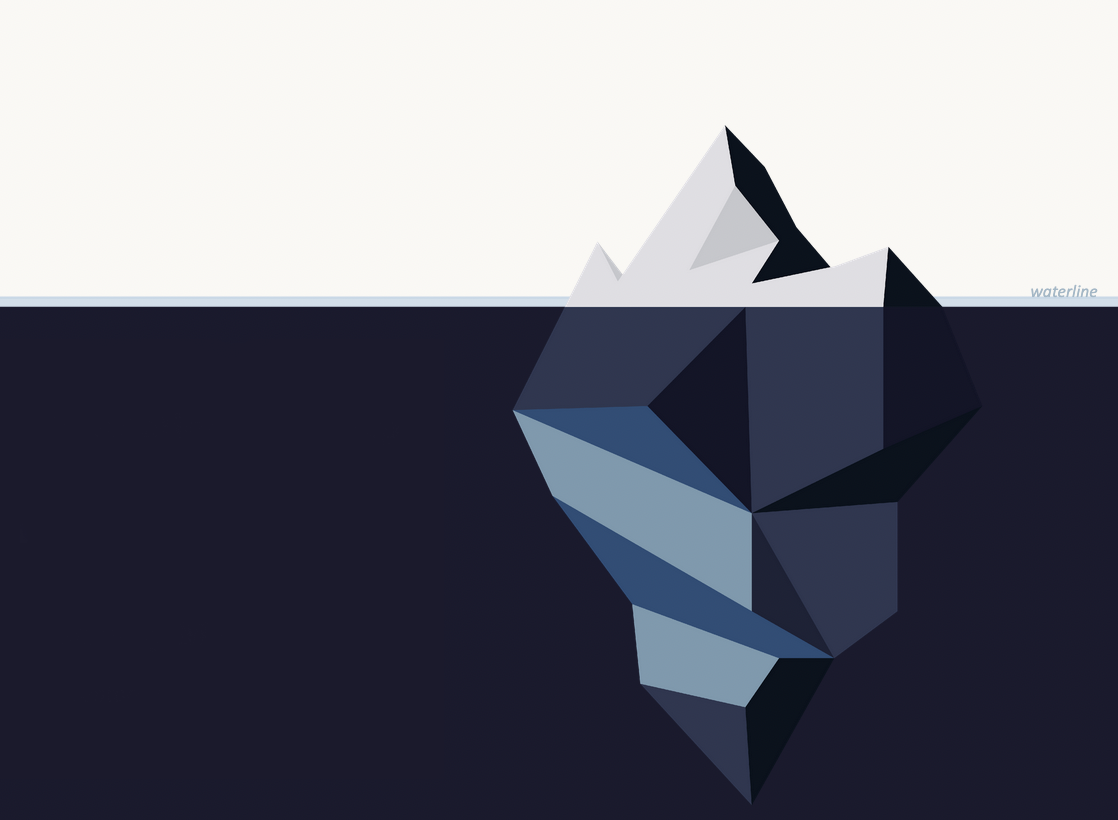
What we found was an iceberg. The visible work — cuts, color, styling — is what clients pay for. Below the waterline is everything else: booking, sanitation, supply management, bookkeeping, and at the very bottom, marketing and social media. That last one has no ceiling and no end time.
"It's not what I do. It's who I am."— Jerry, 49 years experience
No ideas were off limits.
Flamethrowers. Ejecting chairs. AI salon twins. Over three rounds of ideation we generated, clustered, and killed concepts until four reached the final round.
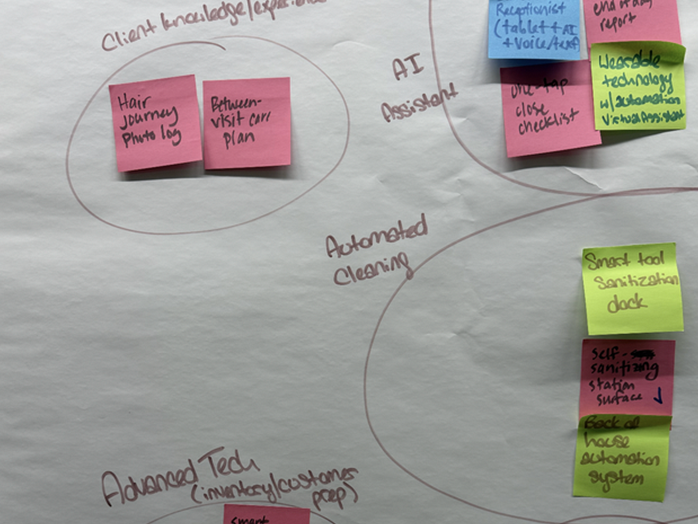
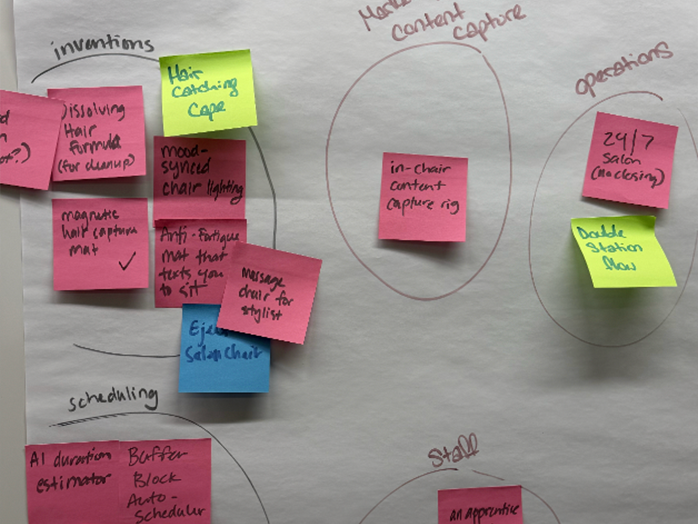
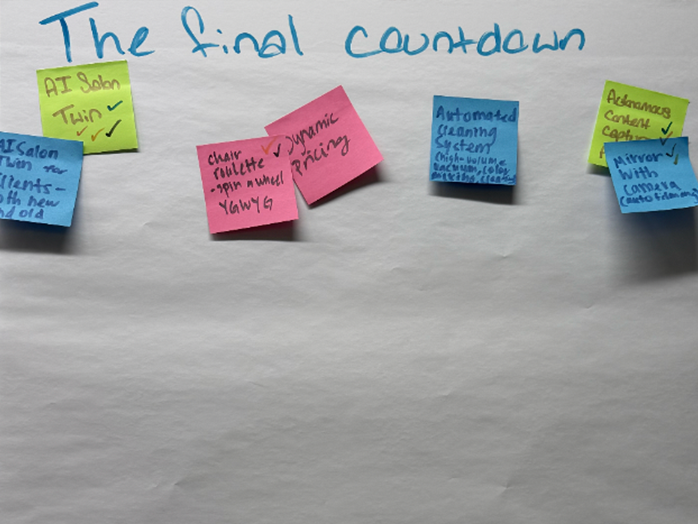
Three rounds of ideation across four categories: marketing & content capture, scheduling, operations, and staffing. Sticky dots voted the strongest concepts forward.
We didn't fall in love early.
Four distinct concepts reached the final round. Only one answered the hypothesis. Real stylist feedback broke the tie.
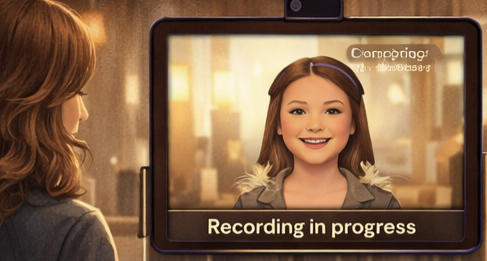
Content Capture System
A mirror-integrated camera system that captures appointment footage automatically and prepares it for social. This became Mira.
"Love this idea from a growth standpoint — and while I'm on vacation I can actually relax." — Lauren, 12 yrs
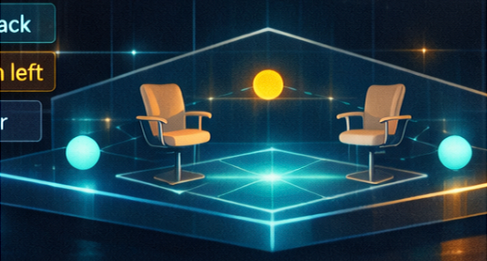
AI Salon Twin
A real-time digital replica of the salon tracking chairs, timers, and inventory live.
"Super interesting concept. In theory sounds awesome." — Lauren
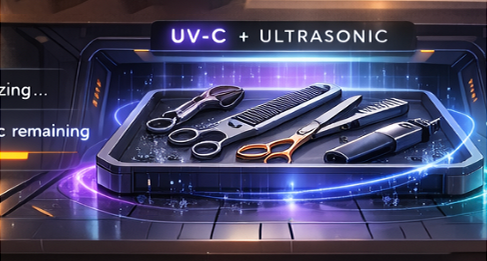
Smart Tool Sanitization
A robotic tray with automated UV and ultrasonic cleaning between clients.
"Sounds awesome, but would need to sanitize within 10–20 seconds while we sweep." — Lauren
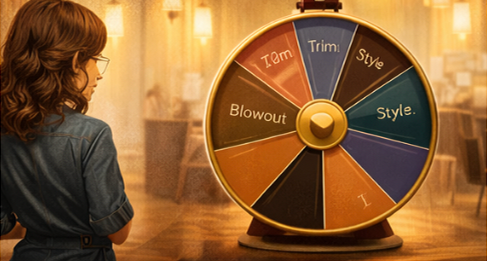
Chair Roulette
Walk-in clients pick a price tier, a wheel assigns a service fitting the current schedule gap.
"Yikes. A lot of times clients book for the wrong things and it throws off the whole day." — Lauren
We removed auto-posting entirely.
Early prototypes included an auto-post feature — content would go live on a schedule without stylist input. Stylists unanimously rejected it.
"I would like the option to approve the post before it automatically did. What if I didn't like what it created?"
— Lauren, real stylist feedbackWe killed it immediately. No post ever goes live without explicit stylist approval. That decision became a guiding principle: Mira is a trusted assistant, not an uncontrollable machine. Every product decision after that moment ran through the same filter.
A professional multi-camera content studio, built into your salon mirror.
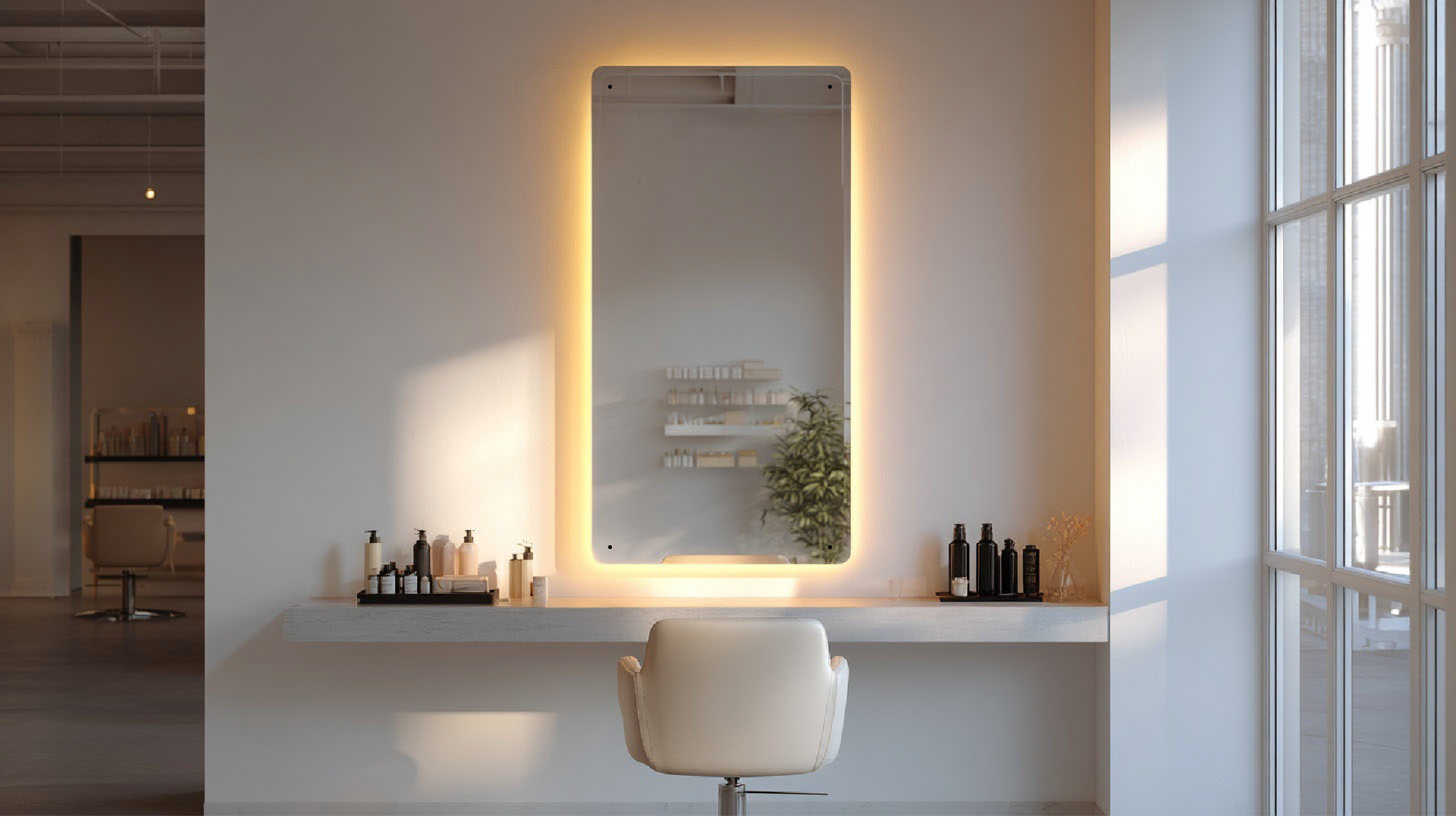
Four 8K lenses. No setup. No interruption.
Wide, medium, tight, and overhead — two lenses at the top, two at the bottom. Every angle of every appointment, captured automatically. No motorized parts. A physical LED on the mirror face shows recording status at all times. Both stylist and client can see it.
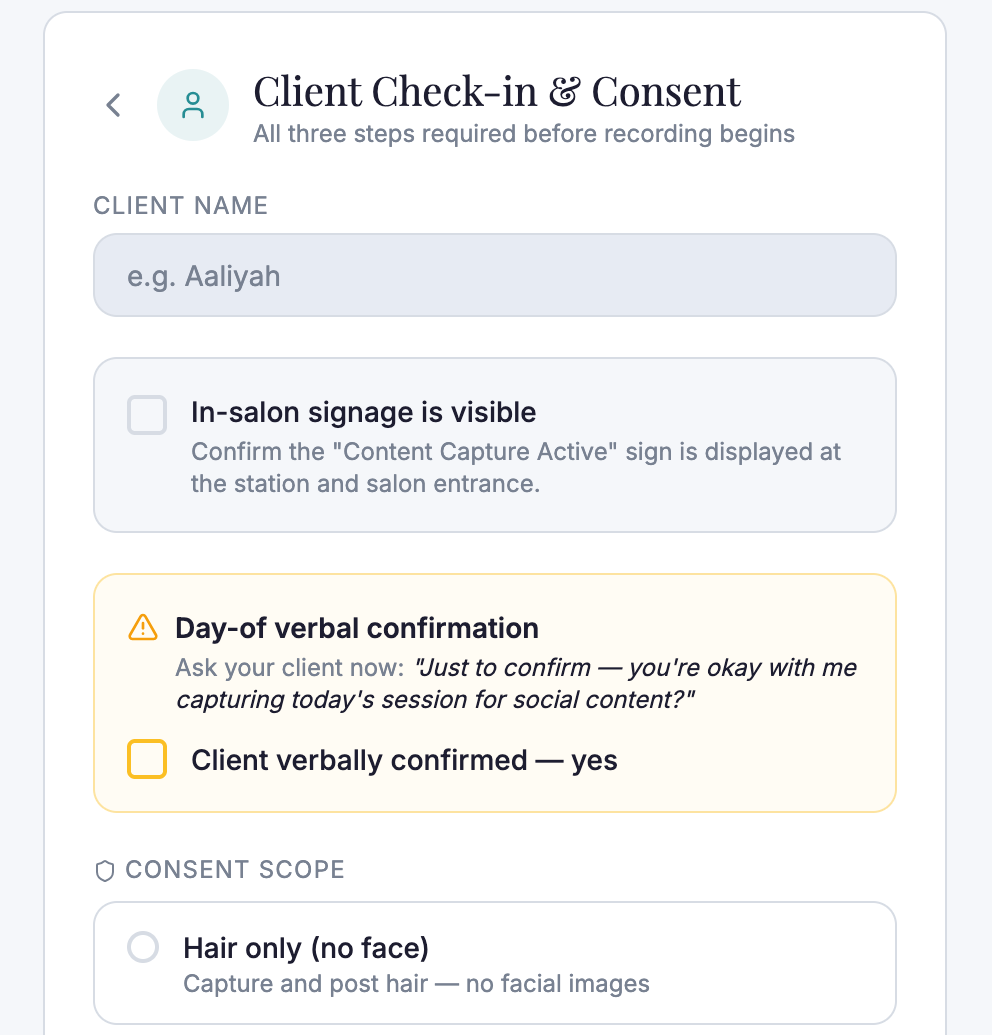
Consent isn't a checkbox. It's a system.
Clients opt in at booking, confirm verbally at check-in, and can pause or revoke at any time. Revocation instantly deletes all in-progress footage with a timestamped log. Face-filtering mode — a feature that came directly from stylist feedback — lets clients decline image sharing while preserving footage focused on hands, hair, and technique.
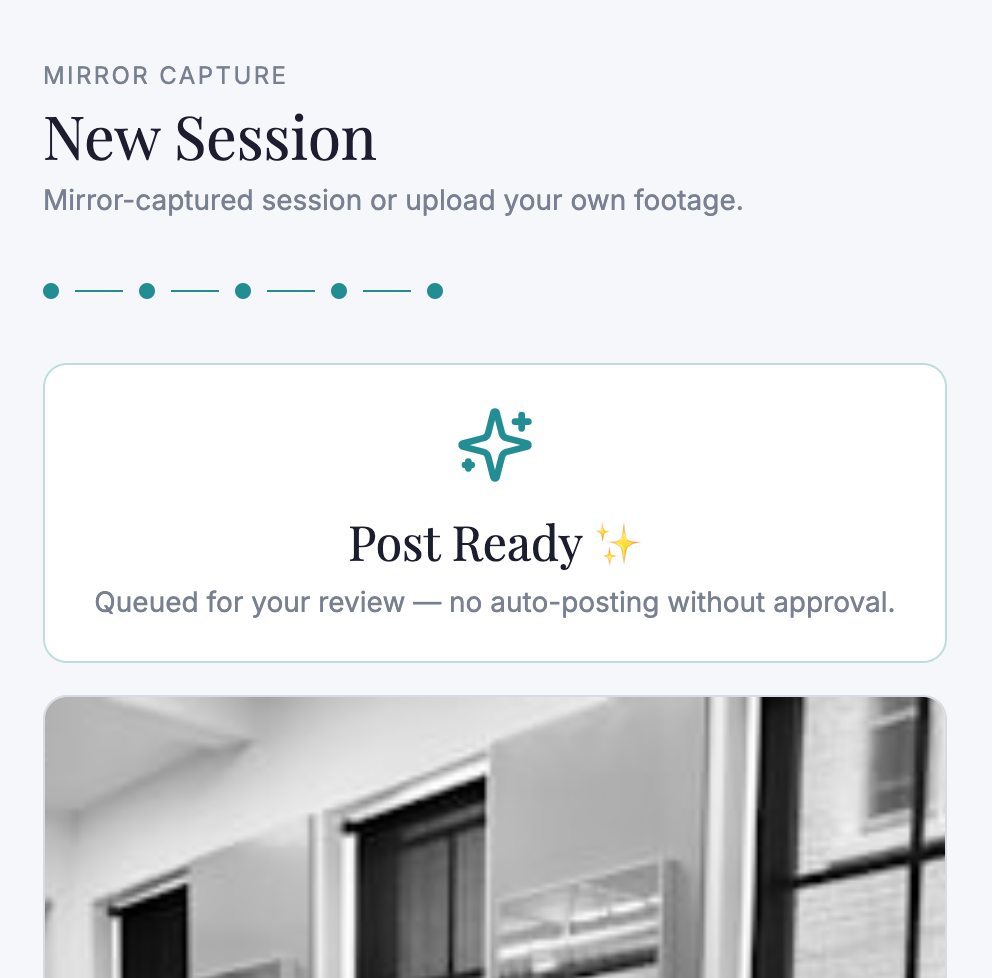
Post ready. One tap to approve.
After each appointment, Mira selects the best clips, applies the stylist's aesthetic, and writes a caption in their voice. The stylist gets a notification: post ready for review. One tap approves it. No post goes live without that tap — ever. Supplemental footage from the stylist's phone uploads directly, auto-tagged to the session.
We used AI to move faster.
We used human judgment to move right.
- Summarizing interview transcripts across six stylists
- Generating extreme concept variations during ideation
- Producing Midjourney image prompts for storyboards and mirror renders
- Building the app prototype UI in Base44
- Writing the presentation and video script at speed
- Which research signals actually mattered
- What the real problem was underneath the surface complaints
- Removing auto-post entirely after stylist feedback — no AI made that call
- Choosing Mira from four finalists
- Defining what the product would never do
We took Mira back to the people who shaped it.
Simulated testing across all six stylist personas. Real feedback from Lauren Hitsler. The responses changed the product.
Stylists are excited by the labor saved — but they'll only adopt if the system feels like a trusted assistant, not an uncontrollable machine.
Lauren Hitsler
"The only suggestion I would have is a setting option for the clients to agree to their images being shared... If they decline then the smart program will automatically switch to focusing on what the stylist is doing with hands filtering out the image of the persons face."
"This is so fun and awesome!!!"
Tammy
"This is the first version where I actually feel my shoulders drop a little."
What resonated: "The bigger thing is the chain reaction after filming — remembering to post, writing the caption, keeping Stories alive. That is real work."
Jerry
"What I do react to is the part where I do not have to stop the service and pick up a phone. That part respects the craft."
What he'd need: proof the mirror doesn't cheapen the intimacy of the service.
Good product decisions come from listening, not assumptions.
The most important features in Mira didn't come from the team — they came from stylists. The face-filtering mode came from Lauren. The no-auto-post rule came from universal feedback we didn't expect. The granular consent model came from realizing a single checkbox wasn't enough.
What this project taught me about creative leadership: the instinct to protect a concept is often the wrong instinct. The best version of Mira exists because we were willing to kill the version we'd originally built. That's not a design skill. That's a judgment call — and it's the one that matters most.
Mira is a concept project produced for MBA Design Thinking & Innovation at UNC Charlotte, 2026. All research, product decisions, visual production, and presentation design by Alex Runde.